
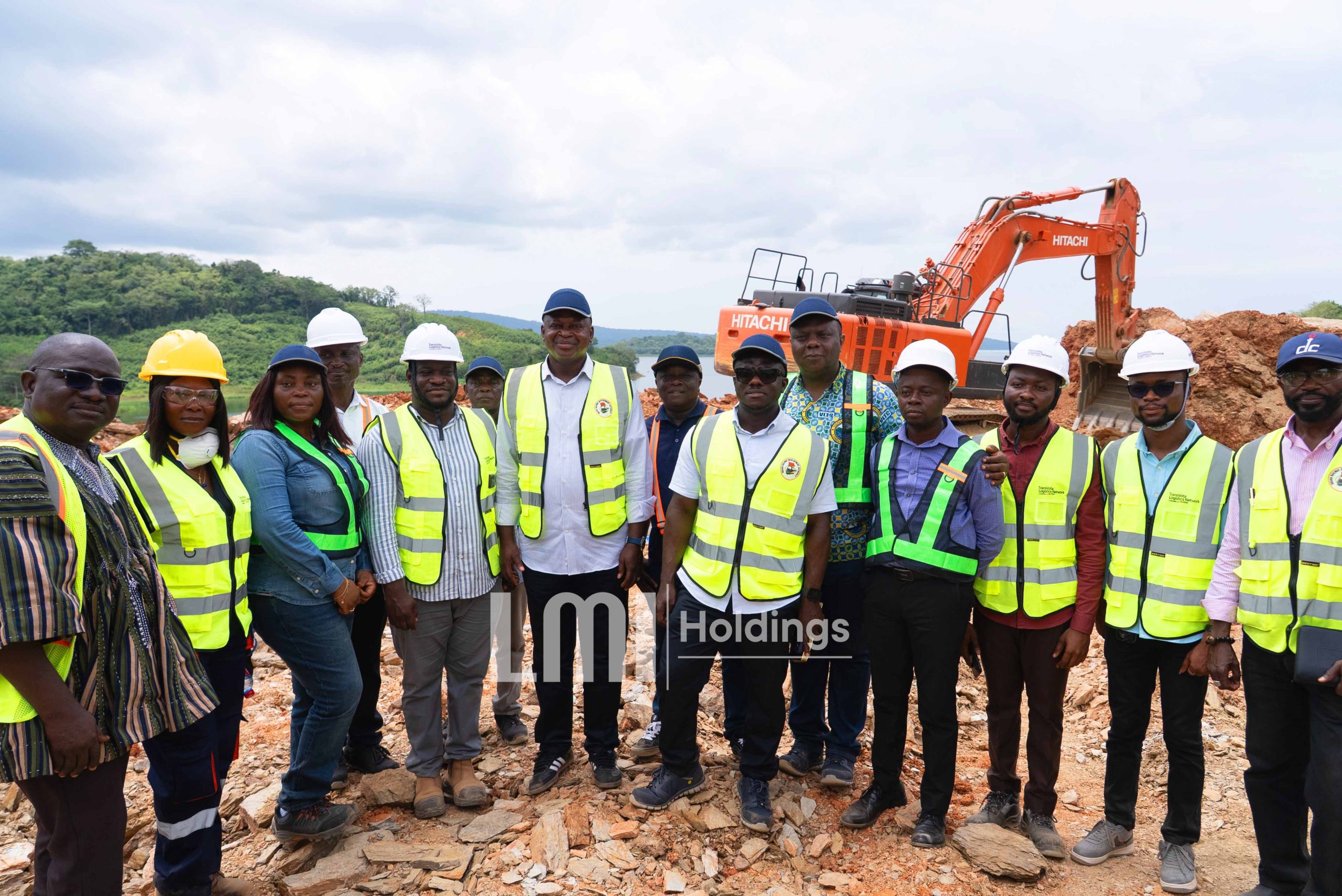
On Wednesday, 16th September 2026, the Minister of Transport, Hon. Joseph Bukari Nikpe, visited the Asikuma Port with Tebon Zuma, Director of Tema Port at the Ghana Ports and Harbours Authority (GPHA); Angela Oforiwaa Alorwu-Tay, Managing Director of Volta Lake Transport Company Limited (VLTC); Dr. Frederick Appoh, Chief Executive Officer of the Ghana Railway Development Authority (GRDA); and directors of the Ministry of Transport.
When partners last gathered at the proposed Asikuma Port site in November 2025, the site was still largely undeveloped. Ten months later, a delegation of Ghana’s transport sector leadership, led by the Minister of Transport, arrived to the sound of excavators and dumper trucks, marking a visible shift from plans to active development. Their purpose was straightforward: to see the work for themselves, ask questions, and understand what remains to be done before the port opens.
Ing. Samuel Yeboah-Ofori, Project Manager for the Asikuma Port Project, led the tour. Before work began, the site was covered in dense vegetation. Today, drilling and blasting is underway, with excavators and dumper trucks removing rock and hauling it to stockpiles. The material will ultimately be used as fill for the platform supporting the port’s ramp.
The team is reducing the ground level from about 105 metres to approximately 86 metres, the required level for the port platform. Once the level has been reduced, the site can progress to the next stage of construction.
The first structure will be a concrete ramp roughly 200 metres long, extending from the shore into the lake. The larger container port will follow as the next phase.
The operating model is built around a simple connection between rail and water. Cargo arriving by rail from Tema will be transferred at Asikuma onto barges and other vessels for onward movement across Lake Volta. Near the port, the lake reaches depths of about 19 metres, providing sufficient water depth for vessels to approach and berth.
Ing. Yeboah-Ofori also outlined the refined construction sequence. Construction of the ramp port is expected to commence in December 2026 and run for approximately 12 months. Work on the container port is expected to begin around October 2027, allowing the ramp port to become operational while development of the container terminal continues.
This phased approach means the corridor does not have to wait for the entire facility to be completed before operations begin. Once the ramp is ready, cargo can begin moving across the lake while the larger container facility is developed alongside it.


Four Agencies, One Corridor
For GPHA, the value of the project extends beyond the port itself.
“We’ve done a lot of investment at the waterfront. Our hinterland connections remain a challenge, so to have this facility here will definitely be of great help to the Port Authority,” said Mr. Zuma. He noted that cargo and container volumes at the port have risen by close to 100 percent, creating an urgent need for alternative routes into the hinterland.
Volta Lake Transport Company, whose landing sites along the lake will serve the wider corridor, also pledged practical support.
“If they need barges to support their work, we will be ready to let them have it,” the Managing Director said. “We’ve already signed a memorandum of understanding with them. This is for Ghana, and we are in this fully.”
GRDA confirmed that it has received an expression of interest from TransVolta and is ready to work with the project team to secure the right of way and establish rail alignment. Once the alignment and design are established, the construction requirements and associated costs can be assessed.
The Minister described the project as one in which the President takes a close interest, given its potential to relieve pressure on Ghana’s existing ports and roads and move cargo to its destination more efficiently. He said he had deliberately brought the relevant agencies to the site so that each could identify how it could support LMI in delivering the port.
The Asikuma Port anchors the TransVolta Logistics Network, a 762-kilometre multimodal corridor linking Tema, through Lake Volta, to northern Ghana and the Sahel. By moving heavy cargo off the highways and onto rail and water, the corridor is intended to lower logistics costs, ease congestion and shorten delivery times for manufacturers, exporters and transit traders.
As the tour drew to a close, Ing. Yeboah-Ofori summed up the confidence behind the project: “LMI has the right people to execute this task.”


